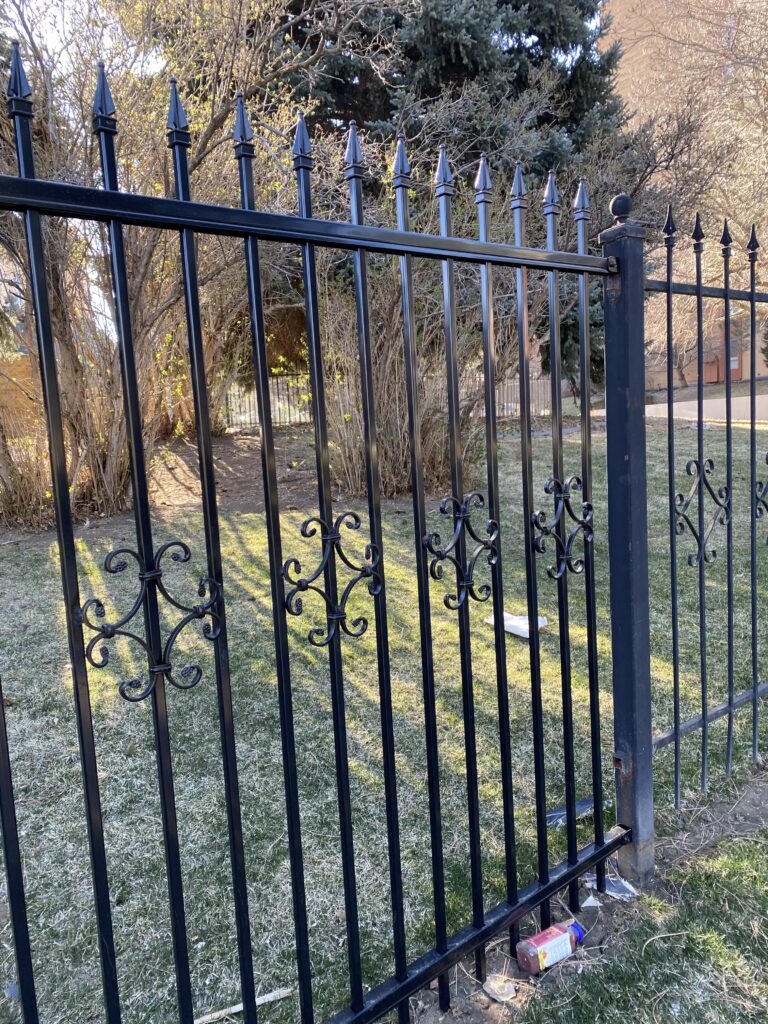
Ornamental Iron Fences.
Security meets elegance.
Wrought iron, aluminum, and decorative steel fences for Denver-area homes and businesses. Choose a design that adds security and curb appeal, backed by our 4-year workmanship warranty.
The fence that doesn't block the view.
Ornamental iron is what you install when you want presence without visual bulk. Unlike privacy fencing, iron fences define a property line while keeping sightlines open — perfect for Denver homes where mountain views, open landscaping, or architectural detail deserve to be seen, not hidden.
They're also the most secure residential fence option. Properly installed steel fencing with spear-top pickets is difficult to climb, impossible to cut through without power tools, and holds its shape against everything a Colorado storm can throw at it.
We install ornamental fencing in three material grades — traditional wrought iron, aluminum for low-maintenance residential, and heavy-gauge steel for commercial and estate applications. Each has real trade-offs, and we help you pick the right one.
Four reasons iron fencing outperforms.
Ornamental iron costs more than wood or chain link — but it earns that premium in places those fences can't touch.
Preserves Views
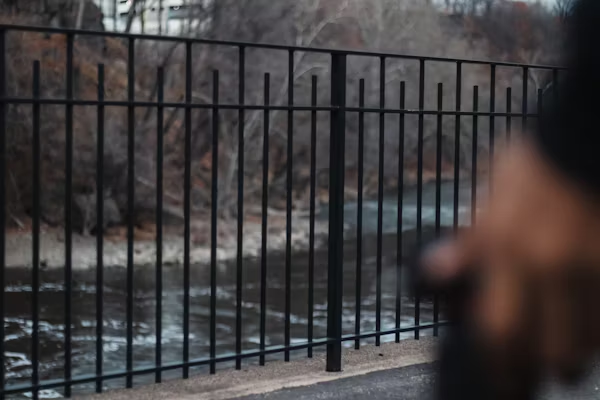
Open-picket design means mountain views, lake views, and architectural landscaping stay visible. Your fence defines boundaries without blocking sight.
Maximum Security
Steel pickets with spear tops are the most difficult residential fence to climb or breach. Optional add-ons include anti-ram cables and height extensions.
Lasts Generations
Powder-coated aluminum lasts 30-50+ years. Wrought iron — maintained properly — can last a century. This is not a fence you'll ever replace.
Raises Home Value
Ornamental iron fencing signals premium property to buyers. Real estate appraisers consistently value iron-fenced properties higher than wood or chain link.
Three grades — each with real trade-offs.
All three look similar from 20 feet away. The difference shows up in longevity, maintenance, cost, and where they work best.
Aluminum Ornamental
Powder-coated cast aluminum delivers the look of wrought iron with zero rust and no maintenance. This is our most common residential install because it pairs the aesthetic with real practicality. Colorado's dry climate is ideal for aluminum — no humidity, no salt air, no reason to worry about degradation.
- Zero rust, zero maintenance
- Lightweight, easier install
- 30-50+ year lifespan
- Most affordable of the three
Wrought Iron (Steel)
True wrought iron is nearly impossible to find today — what's sold as "wrought iron" is typically forged mild steel. It's heavier, stronger, and more substantial-looking than aluminum, with the authentic hand-forged look that luxury estates and historic districts often require. Needs periodic paint maintenance in Colorado.
- Heaviest, most substantial feel
- Can be hand-forged for custom detail
- Unmatched authentic look
- Premium property signal
Heavy-Gauge Steel
For commercial properties, estate perimeters, and high-security installations — welded steel panels with reinforced posts, often with anti-climb features built in. This is what goes around data centers, schools, and municipal properties. Structurally the strongest option and often the most customizable.
- Maximum security rating
- Tallest heights (up to 10ft+)
- Anti-climb and anti-ram options
- Commercial-grade hardware
Iron + Stone/Brick Columns
Iron panels set between stone or brick columns create the most high-end fencing look available. This is estate-level fencing — the columns add visual rhythm and structural strength, and the combination of masonry with ornamental iron is unmatched for curb appeal. We partner with masons for these hybrid builds.
- Highest property value impact
- Adds lighting/electrical options
- Defines prestigious properties
- Fully custom design
Where ornamental iron shines brightest.
Front Yard & Curb Appeal
When you want the property to look distinguished from the street without blocking the view of the home itself. Iron says "this is a well-kept property."
Pool Enclosures
Colorado code requires 4ft minimum pool fencing with self-closing, self-latching gates. Ornamental iron meets code, looks elegant, and doesn't visually shrink the pool area.
Mountain-View Homes
Foothills and elevated properties where the view is the selling feature. Iron defines property lines without hiding why you bought the home.
HOA Entries & Community
Neighborhood entry gates, community park fencing, and perimeter walls for upscale subdivisions. We work with HOA boards on large-scale builds.
Commercial Perimeters
Business campuses, medical buildings, and professional offices. Ornamental iron projects a more refined image than chain link while delivering equivalent security.
Driveway Gates
Automated iron driveway gates — single or double swing, or sliding cantilever — with keypad or remote entry. We partner with gate automation specialists for these builds.
Ornamental fence pricing in Denver.
Compare aluminum and ornamental iron options for Denver-area properties. Design, height, gates, and site conditions determine the quote.
Standard Aluminum
- Powder-coated aluminum
- Standard panel design
- Spear or flat-top pickets
- Color-matched hardware
- Standard swing gate
Premium Aluminum
- Heavy-gauge cast aluminum
- Decorative panel design
- Custom picket details (rings, scrolls)
- Premium hardware and latches
- Pool-code compliant options
- 4-year workmanship warranty
Wrought Iron / Hybrid
- Hand-forged or custom steel
- Stone/brick columns optional
- Fully custom design
- Ornamental detail work
- Estate-grade hardware
- 4-year workmanship warranty
Iron fence pricing varies significantly with design complexity, custom fabrication requirements, gate count, automation, and masonry work. These ranges reflect typical Denver metro installations in 2026. Your written quote will be itemized with no hidden fees. (Expect short Gurantee Prices Due to Shipping and Higer Costs of Transportation, as they can fluctuate on shipment. Best Approach to lock in given quote so that you lock in that given price and let us allocate all material.)
Ornamental iron FAQs.
Ready for a fence that lasts generations?
Free on-site consultation and design review. We'll show you samples, walk your property, and give you a firm written quote within a week.